
 Text light video

Commercial & fleet trailers
Dry vans, reefers and fleet trailers. Mobile service at your yard, dock or a safe roadside location.
Dead, flickering or repeatedly blown trailer lights can be a ground, connector, harness or lamp problem. We test the circuit at the trailer in Broward and quote the actual wiring or lamp repair before replacing parts.
Confirm availability and service-call rate before dispatch.
A lamp is a lamp. What varies is how far back the fault runs — a dead ground under a housing is minutes, a corroded harness down a 53-foot van is a half-day rewire. We test the circuit before quoting, so you are not paying for guesses.
| Factor | Why it moves the number |
|---|---|
| How far the fault runs | Bulb, ground, connector, harness section or full rewire. Each step up is a bigger job. |
| How much corrosion | South Florida and salt water destroy connectors. If the copper is green, patching it buys weeks. |
| Trailer length and lamp count | A utility trailer and a 53-foot van do not carry the same number of lamps or feet of wire. |
| Sealed LED or incandescent | Sealed LED conversion can reduce recurring lamp faults; the total depends on the wiring and components needed. |
| Whether ABS is involved | ABS wiring faults need diagnosis; the actual defect and applicable inspection criteria determine service status. |
| Submersible or not | Boat trailer lighting needs sealed submersible components. Different parts, different labor. |
| Roadside or at your yard | Booked work is cheaper. A lamp out at night on the Turnpike is not booked work. |
We quote before we start and we do not begin work you have not approved. We do not publish ranges here, because the same job varies too much by trailer, access and hour — call and we will give you a number for your unit.
Recurring lamp failures can come from a corroded ground, water in the harness or a damaged previous repair. Circuit testing identifies the fault before a lamp, connector or harness repair is proposed.
| Symptom | Real cause | Proper fix |
|---|---|---|
| One side dark | Corroded ground or chafed harness on that run | Ground cleaned and re-terminated, run replaced |
| Lights dim or flicker with the brakes | Bad ground path, undersized previous repair | Dedicated grounds, proper gauge wire |
| Works until you hit a bump | Broken strand inside insulation, loose pin | Section replaced, pins renewed |
| Blows the same fuse repeatedly | Chafe to frame, water in a connector | Short traced, sealed connectors fitted |
| Lights out after launching a boat | Non-submersible lamps and open connectors | Submersible LED and sealed conduit run |
| ABS lamp on, lights otherwise fine | Sensor gap, tone ring or sensor wiring | Scan tool diagnosis, sensor replacement |
No twist-and-tape splices, no test-light guessing. Connections are crimped and sealed; ground connections are secured to clean metal as appropriate.
Inoperative required lamps are a standard write-up, and they are the easiest defect for an inspector to spot from outside the cab. Missing or damaged conspicuity tape gets cited too.
We correct lighting defects on site and document the repair for the file. If lights are a recurring problem across a fleet, a rewire programme costs less than the call-outs and the write-ups together — see fleet PM and DOT annuals.
Dry vans, reefers and fleet trailers. Mobile service at your yard, dock or a safe roadside location.
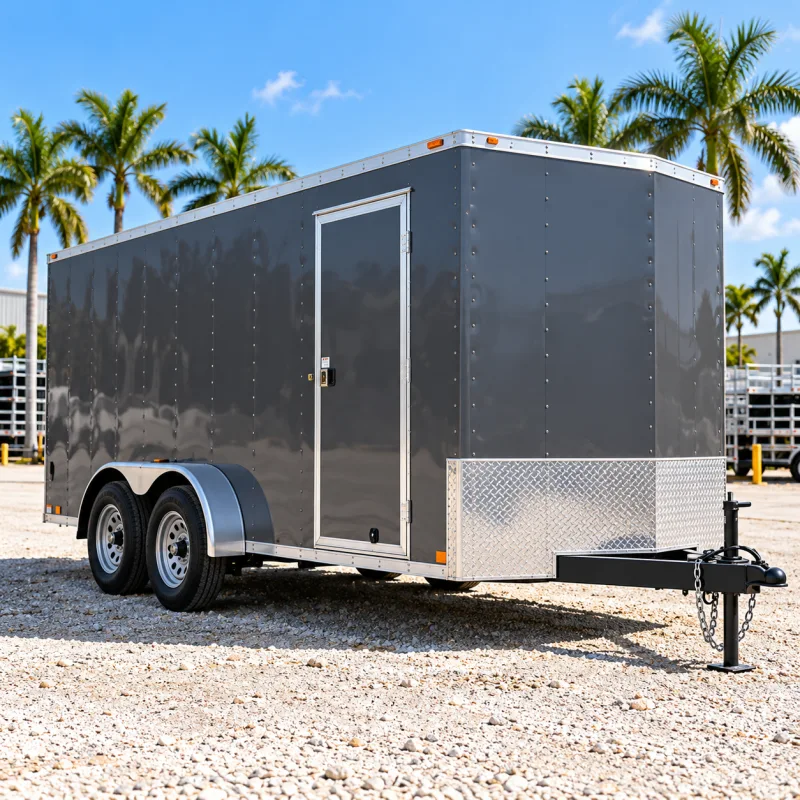
Enclosed, open, cargo and equipment trailers. Bearings, brakes, lights and more.
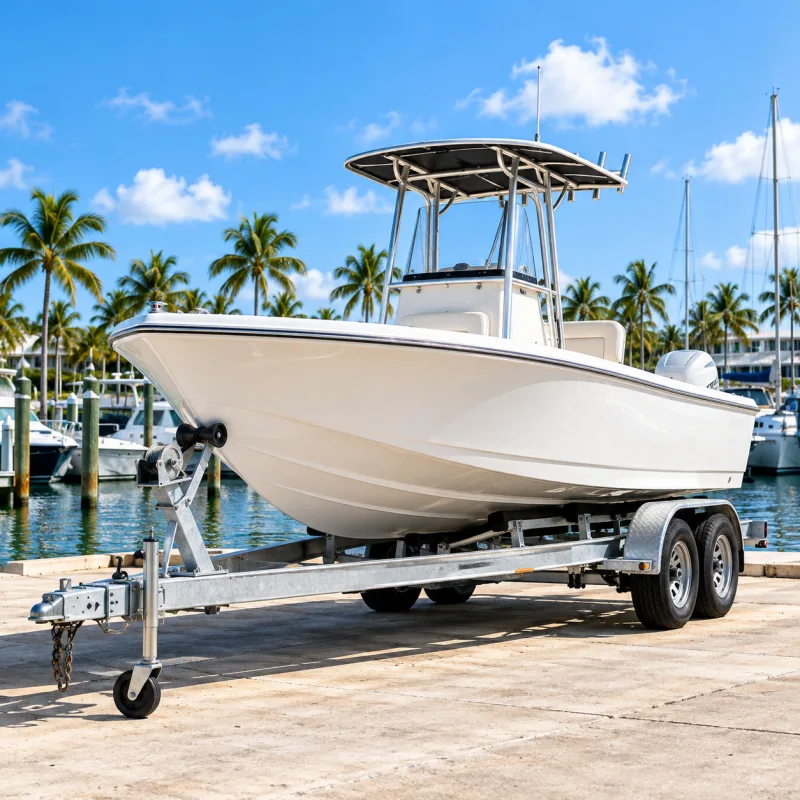
Tell us which lamps are dead and whether it changes when you wiggle the plug. That usually tells us where the fault is before we arrive.
